
Our children have been rapidly growing for the past 9 months, at least, and are continuing to grow and develop right before our eyes. While our babies are developing, they must have the right conditions to mature properly to avoid serious complications in the future.
Before Walking
Babies who are not walking should not wear shoes. However cute they may be in those tiny “tennies”, they will prohibit natural movement and development. Developing senses in the early months is important, and keeping their feet uncovered as much as possible is best. To protect from the cold, socks made from natural materials such as wool are prime.
“At birth, a baby’s foot is not a miniature version of an adult foot. In fact, the structure and composition of a baby’s foot are vastly different. Babies are born with a high percentage of cartilage in their feet, which gradually ossifies into bones as they grow. This process continues well into adolescence, with the bones in the feet not fully hardening until around 18 to 21 years of age.”
Since babies’ feet are so different and have different needs, why are we trying to put them in miniature adult shoes? If we’re honest, those shoes hurt our feet, too. Socks and similar clothes are all that is necessary for a baby who is not walking.
Learning to Walk
When learning to walk, it is imperative that babies be barefoot as much as possible. Only dress them in shoes to protect them from dangerous environments, i.e., hot or cold surfaces, stickers, rocks, or similar circumstances. In order for babies’ arches to develop properly, toes need to be able to spread, and shoes must be extremely flexible. Wearing shoes with narrow or misshapen toe boxes restricts mobility, prevents natural development and growth. An even more unfavorable shoe is stiff and does not allow the foot to bend and grip naturally. Not learning how to walk and balance barefoot, as well as feet being conformed in unnatural positions, can lead to serious conditions as they age.
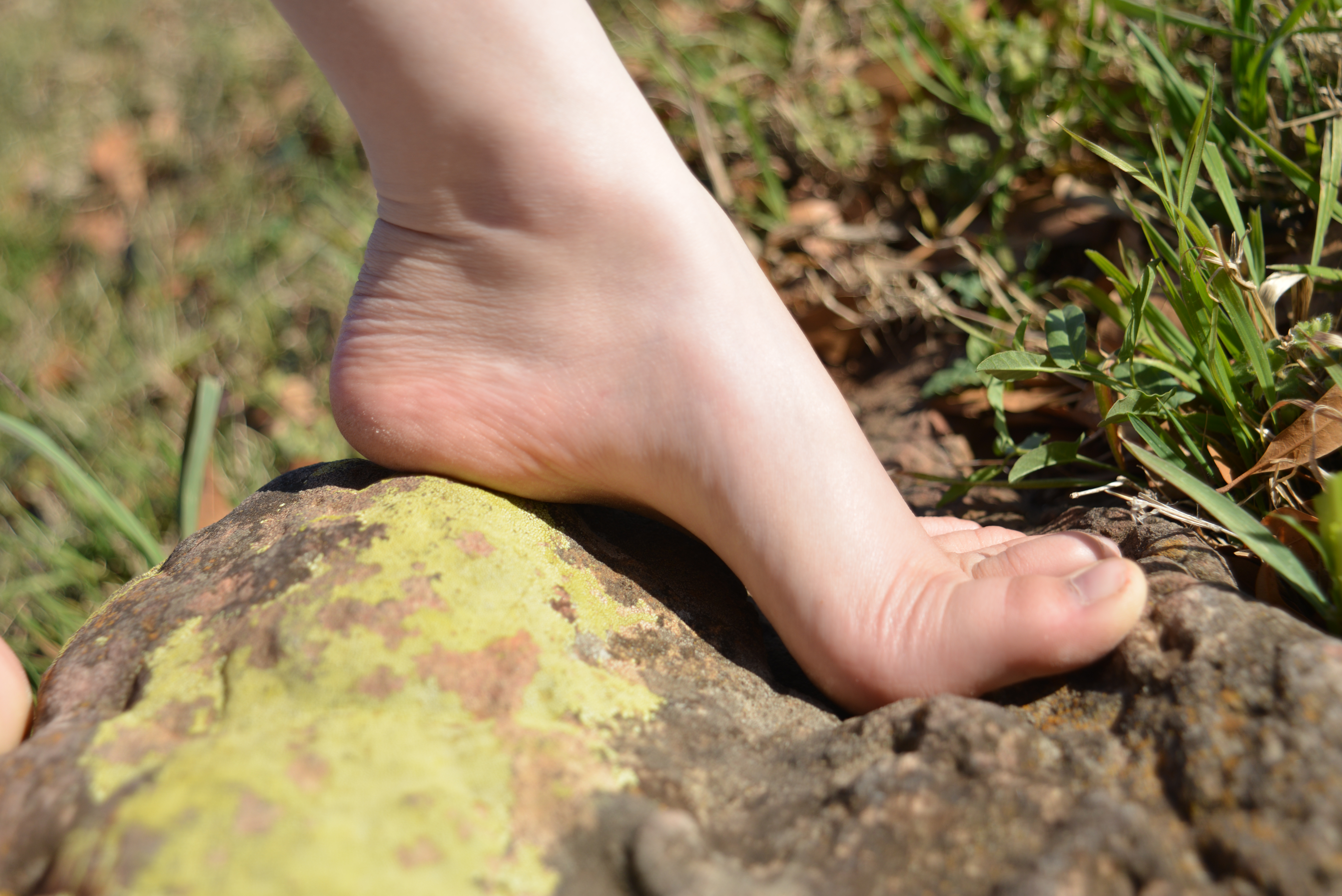
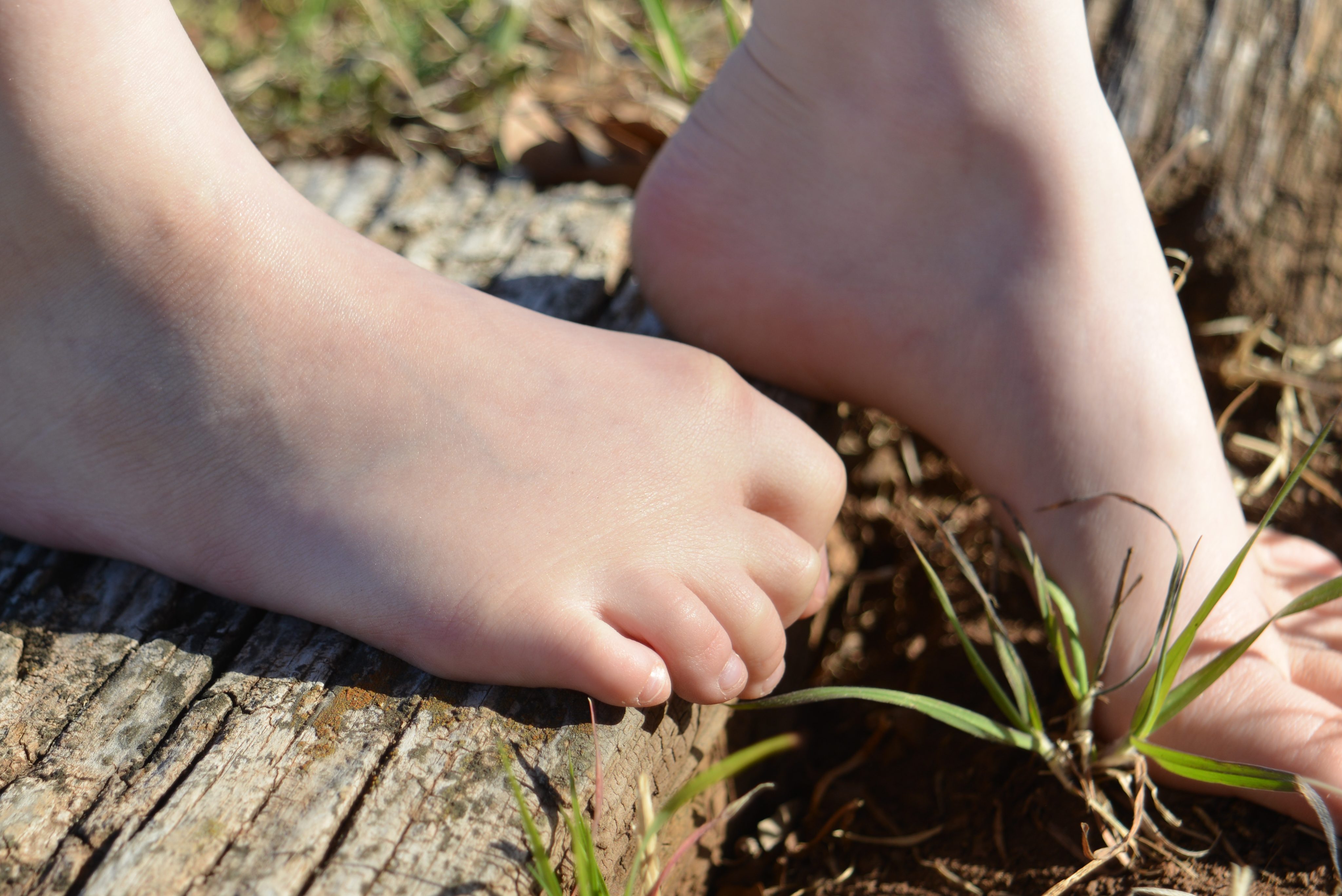
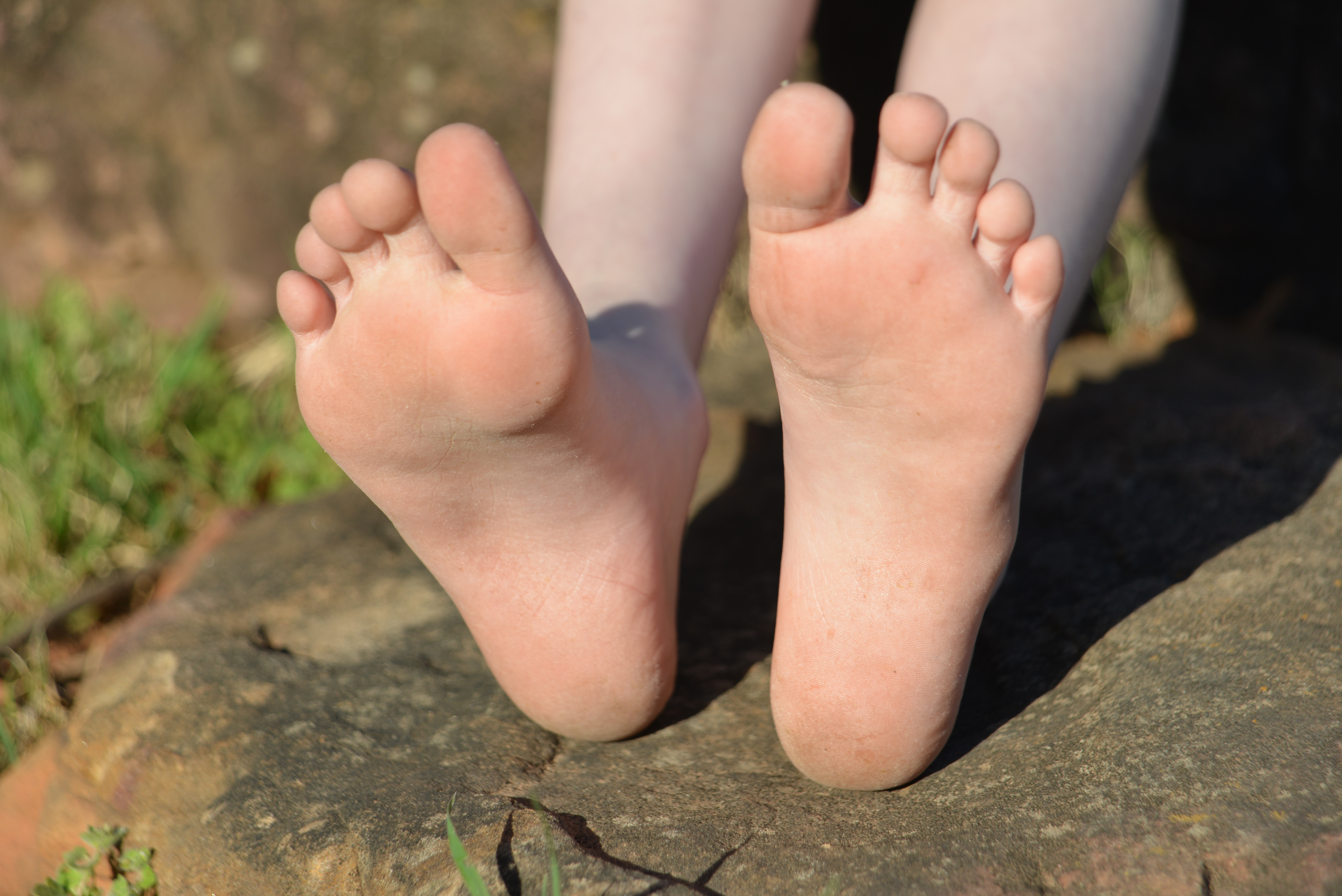
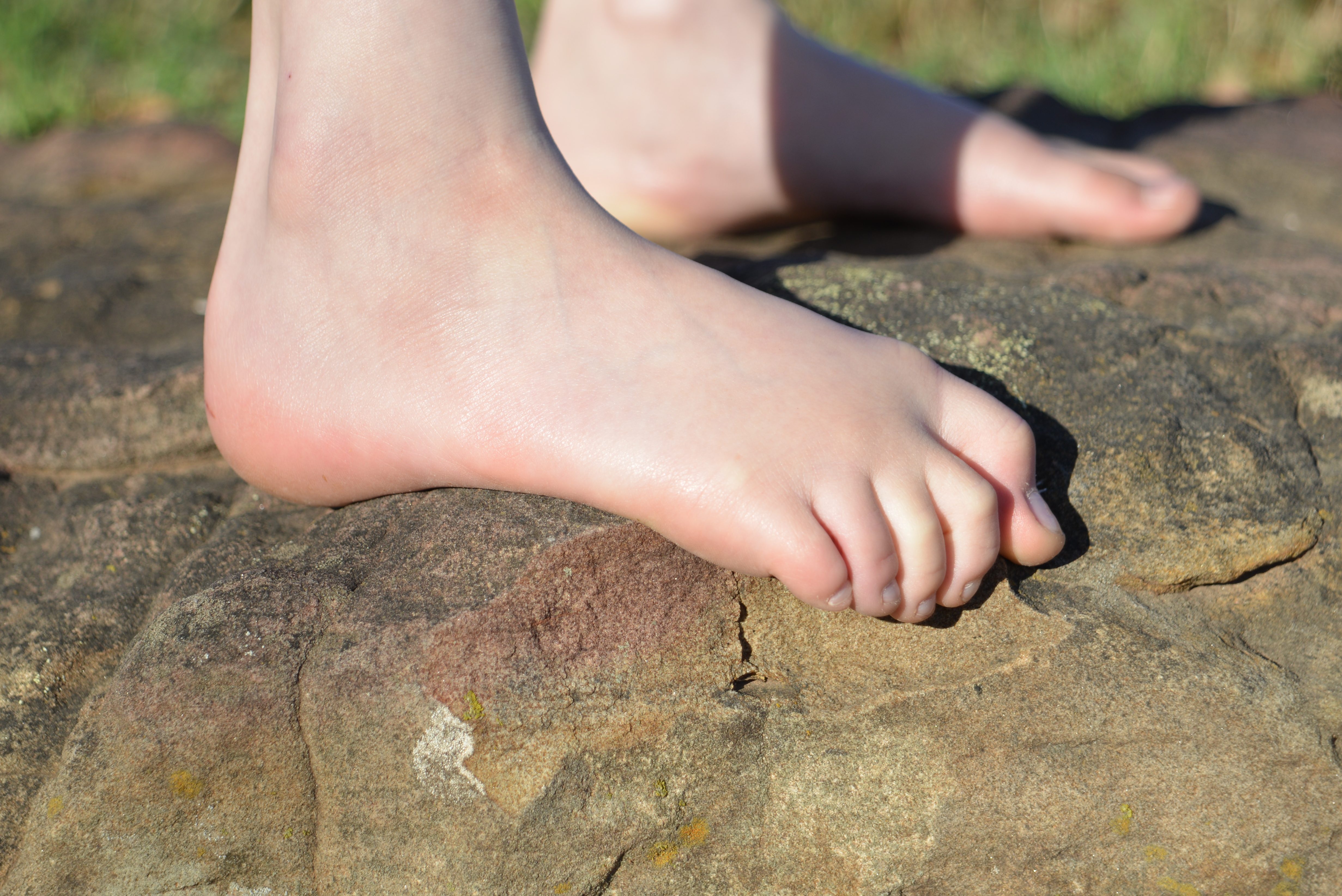
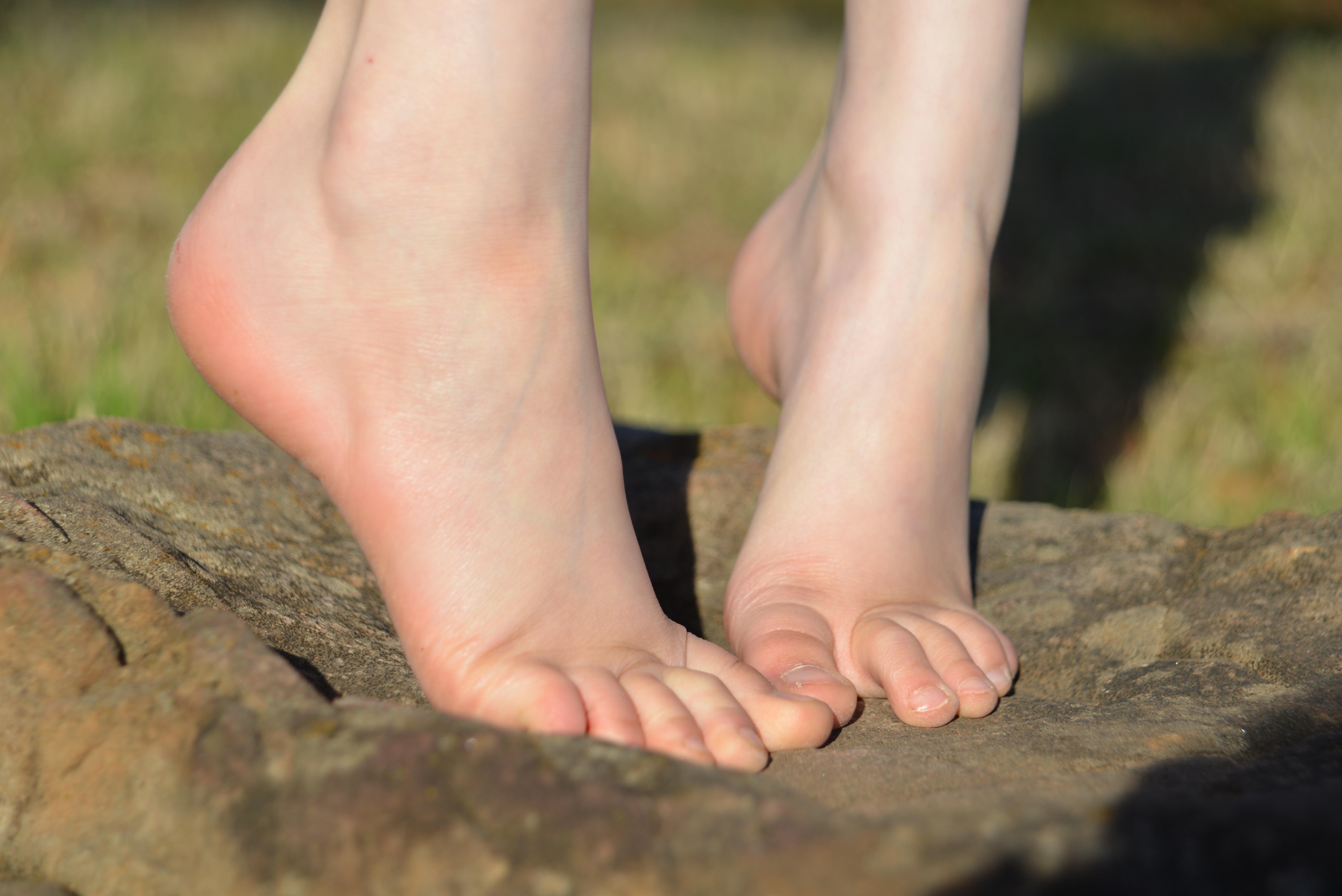
Feet naturally bend and grip. If babies never utilize their foot muscles, they become weak; Their tendons will grow tight and brittle, leading to frequent injury as they grow. Encouraging walking and climbing barefoot outdoors as much as possible will help their feet to grow strong and support their bodies.
I personally know the havoc foot problems like plantar fasciitis wreak on bodies. My dad grew up in the era when babies learning to walk wore super-thick shoe soles. He already didn’t have a strong foundation for his muscles, and needed steel-toed boots for his job. He used generic, narrow work boots and suffered badly. His feet were so weak that his arch was collapsing. He couldn’t walk after coming home from work. That was an extremely hard time for my family. He began stretching multiple times a day and used a balance disc cushion recommended by our chiropractor to rebuild his foot muscles. Today, you would never know the pain he went through. He took the time to care for his body and slowly rebuild his muscles and tendons.
It is extremely important to me that parents are aware of the dangers of narrow, stiff shoes.
Walking
Until around 3, use shoes with maximum flexibility.
“From birth to 12 months the feet and legs go through a series of remodeling and alignment to prepare for crawling and walking. At six months of age the foot is still mostly cartilage; in fact, the last bone doesn’t begin to form until children are about three years old.
From birth til age 6-7 years, dynamic changes occur in bone growth, alignment, muscular and neurological development.
Further final ossification of bone occurs, particularly the heel and Tibia bone, occur between ages 9 to 13, which children can experience inflammation of growth plates, eg Severs, Osgood Slatters. These conditions can be exacerbated by sporting activities.
By 18 years, most of the bones are fully formed, but they don’t fully fuse until 22-23yrs of age.”
Webby, David. “Children’s Feet.” Daniel Lewis Podiatry, http://www.daniellewispodiatry.com/childrens-feet.
Our babies start needing more foot protection when they become more adventurous. Once muscles are strong and all their foot bones have begun ossification, around 3, shoes worn can be stiffer, but still opt for a natural bend.
Kids start getting their own opinions, and it becomes more difficult to pick their clothing and footwear for them. If your kids are begging for the popular shoes, check out splay shoes. Try to explain the importance if they are old enough, and at the end of the day, try to find wide toeboxes and flexible soles.
 Jonnie's Herbs with Honesty
Leave a comment