
Hello Wildflowers, (Luke 12:27)
As mothers and parents, we seek to find the best options for our children. To protect them from the dangers of this world. We’ve explored baby bottles, the dangers of using plastic bottles, and the health risks of microplastics exposure. Now, let’s unpack baby clothes and the materials that they are exposed to.
Polyester is a popular clothing material used for its budget-friendly production. If you haven’t purposefully eliminated polyester from your closet and drawers, you will likely find many of your favorite clothing pieces are composed of this synthetic oil-based plastic. In my article about baby bottles, we discussed many dangers of using plastic and being overly exposed to microplastics. Here is another way manufacturers have hidden plastic in an abundance of items we use daily. After reading, I implore you to go check the tags on clothes, undergarments, sheets, towels, blankets, and more.
Below is the manufacturing process used to spin synthetic materials into fabric.
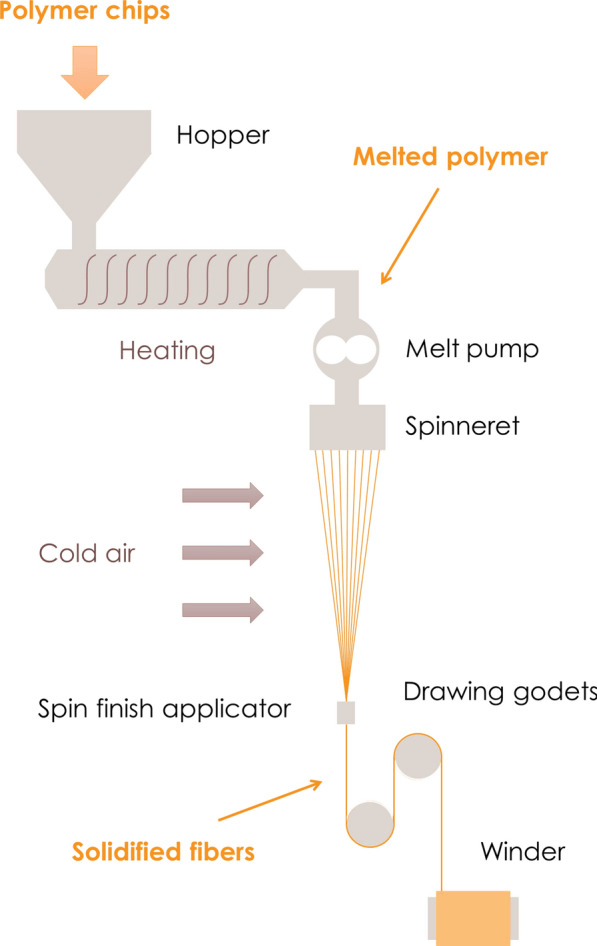
https://pmc.ncbi.nlm.nih.gov/articles/PMC7787125/figure/Fig3/
“Polyester clothing manufactured from oil-based polyethylene terephthalate (PET) is the market leader.”
– Palacios-Mateo, Cristina, et al. “Analysis of the Polyester Clothing Value Chain to Identify Key Intervention Points for Sustainability.” Environmental Sciences Europe, vol. 33, no. 1, 6 Jan. 2021, enveurope.springeropen.com/articles/10.1186/s12302-020-00447-x, https://doi.org/10.1186/s12302-020-00447-x.https://pmc.ncbi.nlm.nih.gov/articles/PMC7787125/#Fig3
Phylates are linked to PET (The oil-based plastic shown above, which is used to make clothing and fabric like polyester and rayon, among others). In a study where incubated snails were placed in glass or PET bottles, it was found that xenoestrogen leached from the plastic bottles, causing growth in the embryos contained in the PET bottles. This means that toxins were powerful enough to cause hormone-like effects, so when exposed to PET, the body can be affected similarly to taking hormones. Especially in little bodies, exposure can damage them while they are trying to grow.
“Regarding the snail bioassay, Wagner and Oehlmann (2009) concluded that “it is obvious that the observed effects can only be attributed to xenoestrogen leaching from these plastic bottles. Moreover, the compounds released by the PET material were potent [enough] to trigger estrogenic effects in vivo similar to those of E2 [17α ethinyl estradiol] at a concentration of 25 ng/L.” The maximum estrogen activity that they detected in any brand of water was equivalent to 75 ng/L of ethinyl estradiol.”
https://pmc.ncbi.nlm.nih.gov/articles/PMC2854718/#b37-ehp-118-445
Sax L. Polyethylene terephthalate may yield endocrine disruptors. Environ Health Perspect. 2010 Apr;118(4):445-8. doi: 10.1289/ehp.0901253. PMID: 20368129; PMCID: PMC2854718.
In the same article found on the National Library of Medicine, Leonard Sax writes, “In a third report, investigators at the University of Missouri tested the effect of an unspecified brand of PET-bottled water on the proliferation of breast cancer cells. They found that the PET-bottled water triggered a 78% increase in the growth of the breast cancer cells compared with the control water: 1,200 breast cancer cells multiplied to 32,000 in 4 days when incubated in PET-bottled water, versus 18,000 for the control sample (Naidenko et al. 2008).”
In an article under the National Institutes of Health, we can find just how dangerous exposure to xenoestrogens can be, especially in infants. Authors write, “Estrogens play an important role in development and function of the brain and reproductive tract. Accordingly, it is thought that developmental exposure to environmental estrogens can disrupt neural and reproductive tract development potentially resulting in long-term alterations in neurobehavior and reproductive function. Many chemicals have been shown to have estrogenic activity whereas others affect estrogen production and turnover resulting in disruption of estrogen signaling pathways.” “…exposure to estrogenic compounds could produce irreversible epigenetic reprogramming of ovarian genes that control ovarian follicular development that could, in turn, lead to abnormalities in adulthood.“
Cruz G, Foster W, Paredes A, Yi KD, Uzumcu M. Long-term effects of early-life exposure to environmental oestrogens on ovarian function: role of epigenetics. J Neuroendocrinol. 2014 Sep;26(9):613-24. doi: 10.1111/jne.12181. PMID: 25040227; PMCID: PMC4297924. https://pmc.ncbi.nlm.nih.gov/articles/PMC4297924/
To provide a real-life example of the impact of these chemicals, an article published by Taylor & Francis Online explores the case of a 36-month-old girl and her mother’s hair products. “Premature estrogenic effects may result from exogenous exposure to estrogenic substances. We report the case of a 36-month-old girl who presented with vaginal bleeding, uterus enlargement, and thelarche. Questioning of the parents revealed that the child’s mother had used hormone-based hair lotions on her own scalp and that the child was in the habit of playing with her mother’s hair while falling asleep, and that the girl played with her mother’s combs and the empty lotion vials. The onset of hyperestrogenic syndrome was temporally related to the handling of lotions containing ethynylestradiol 0.5%. Analysis of long scalp hairs from the girl and her mother identified ethynylestradiol in concentrations of 10.6 and 46.6 µg/g, respectively.”
https://www.tandfonline.com/doi/full/10.1080/15563650701638941?scroll=top&needAccess=true#d1e138
Over time, symptoms reversed; however, what long term affects may appear in the years to come? We have already discussed the link between synthetic estrogen and ovarian dysfunction. Just how much exposure is needed for irreversible symptoms to take effect?
Recent studies suggest that wearing polyester creates an electromagnetic field around the body, preventing conception.
https://pubmed.ncbi.nlm.nih.gov/8886260/ https://pubmed.ncbi.nlm.nih.gov/1456835/
Our bodies have their own electric currents. Wearing polyester creates enough of a disturbance in our electric field that it hinders reproductive organs; what other organs are slowly suffering because of our fashion and material choices?
This study revealed that oral exposure to PET microplastics alters the pancreas and points to an added reason for the rising diabetes rates.
https://www.biorxiv.org/content/10.1101/2024.11.05.622142v1.full#abstract-1
Another link to rising diabetes rates was found. Paternal exposure to microplastics rewrites sperm and can trigger diabetes in daughters. More research is being conducted to find out why the rewrite is sex-specific and the implications of maternal microplastic exposure.
https://medicalxpress.com/news/2025-12-fathers-microplastics-exposure-children-metabolic.html#google_vignette https://scitechdaily.com/microplastics-can-rewire-sperm-triggering-diabetes-in-the-next-generation/
That shows that even if you keep your baby in natural fibers and take steps to avoid microplastics, unless all of the family is on board, there can still be consequences to our children’s health. If you plan on having more kids, go get your husband some cotton clothes, they aren’t let off the hook that easily 😉
Don’t think that any amount of limiting exposure is worthless, though! Being a co-parent, my baby still gets exposed to a lot of toxins and microplastics>:( Many times, I question why I even try since the baby’s going to go back and be exposed again. Every little thing makes a difference, though! Small microplastics add up, and when you limit plastic intake and exposure, the body has a better chance of flushing them out. Don’t give up even if your effort seems in vain! You ARE making a difference even if no one else cares! It’s for your baby, it keeps their little precious bodies safer, and when their friends have a ton of health problems, and they don’t, they’ll thank you 🙂
So, polyester is PET, which is a plastic linked to major health issues. When someone is constantly exposed to PET via clothes, bed sheets, towels, shower liners, blankets, toys, dishes, diapers, packaging, and so much more, it adds up, and the body is unable to dispose of the toxins. Very similarly to how heavy metals can build up and poison the body. Every single swap and limitation of exposure helps and makes a difference. Unfortunately, it is next to impossible in today’s world to avoid all plastics, but by taking small steps to avoid overexposure, therefore giving the body a chance to flush them out, you can provide a healthier future for your family.
Stay tuned for my next articles on how to start taking steps to swap out toxic household items for cleaner, safer alternatives, and my own journey to getting rid of plastic.

 Jonnie's Herbs with Honesty
Leave a comment